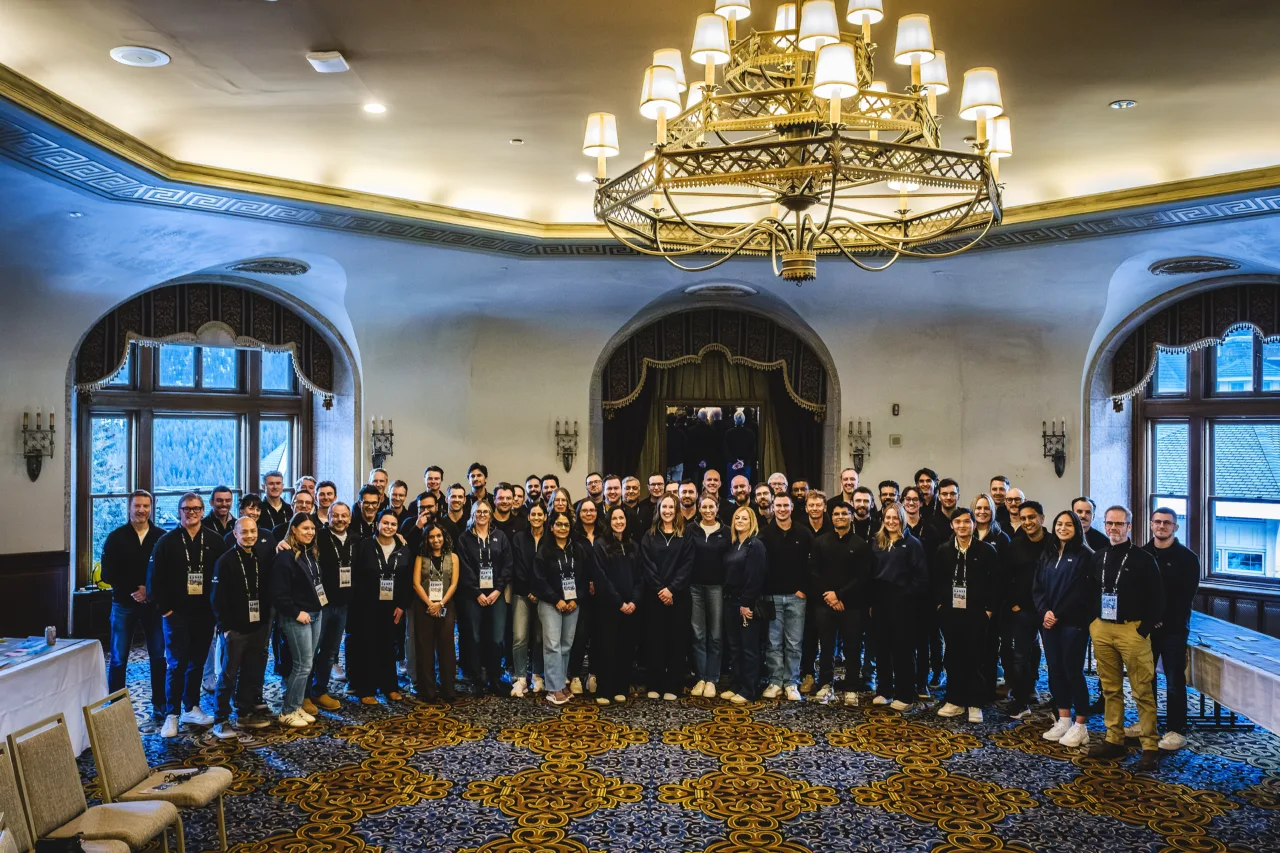
The macro picture is improving
Benjamin Tal, Chief Economist at CIBC, made the strongest case we have heard in months for reduced uncertainty. U.S. tariffs are not going away, but they will settle at predictable levels. That matters because uncertainty—not tariffs themselves—has been freezing capital deployment decisions across our sector.
With U.S. mid-term elections approaching in November 2026, tariff policies are facing increased scrutiny. The Senate voted against tariffs on Brazil and is now discussing Canada. Tal noted that tariffs have become increasingly unpopular with American consumers as prices rise on everyday goods from aluminum to food products.
Tal’s view: tariffs on Canada will be “narrow and deep”—lumber and dairy, yes; energy and aluminum, unlikely long-term. More importantly, we will know the rules. Capital hates uncertainty more than it hates costs.
Tal showed that capital investment has declined sharply globally. CEOs under profit pressure are replacing labour with artificial intelligence (AI) rather than investing in growth. That is a headwind for getting the capital Canada needs for infrastructure. But it also creates opportunity for those positioned to move when conditions improve.
Calgary’s housing story: Strong fundamentals, execution risk
The numbers are compelling. Calgary has absorbed 320,000 new residents since 2021. CMHC says the city needs 30,000 housing starts annually to keep pace. Housing construction remains strong, but here is what concerns us: Calgary can build faster than any other major Canadian market. That is usually an advantage. In a slowing environment, it creates oversupply risk.
Population growth is moderating from its 6 per cent peak to about 1.5 per cent. Jobs are not being created fast enough. Unemployment is rising. Per capita spending is falling even as aggregate spending grows—Calgarians are spending more collectively but have less purchasing power individually.
Charles St-Arnaud, Chief Economist at Alberta Central, made a point worth noting: Alberta wages used to command a 20 per cent premium over the rest of Canada. That is now 5 per cent. Purchasing power is eroding.
But here is the other side: Tal presented convincing evidence that government projections of near-zero population growth are wrong. 92 per cent of temporary residents stay and apply for permanent status. Actual growth will likely be 1.5 per cent, not zero.
Industrial: The clearest opportunity
Taylor Hudzinski, CFA, Vice President and Co-Founder of XXIII Capital Inc., noted that Calgary requires approximately 110 square feet of industrial space per new resident. Using her numbers, we can therefore assume that an annual population growth of 25,000 people—a modest level for Calgary—would require an additional 2.75 million square feet of new demand per year.
Add reshoring and de-globalization—manufacturing capital expenditure has soared since 2021—and the industrial story strengthens considerably. This is the asset class where we see the least execution risk and strongest medium-term fundamentals.
Tech growth meets power constraints
Calgary has become the fastest-growing tech market in North America. 65,000 tech jobs, 8 per cent of employment, versus a 5.3 per cent continental average. That is creating real estate demand across all property types.
But Tyson Birchall, Managing Director at Longbow Capital, laid out a constraint we need to watch: Alberta has 12 gigawatts of peak power capacity. Data centres in the development queue need 16 gigawatts. You cannot compete in AI without power.
The data tells the story. Electricity demand was flat for decades—from 1950 to 2007, demand grew 3 to 5 per cent annually, then essentially stopped, with 0 per cent average growth from 2007 to 2021. Now U.S. demand needs to add 1,000 terawatt-hours in seven years versus 400 in the previous 23 years. Near-term solution: natural gas. Long-term: nuclear. But nuclear takes time.
This is an infrastructure constraint that will take years to solve. It is also an opportunity for innovation and capital deployment in the power sector.
Energy: Trans Mountain Expansion delivers, but watch the downside
Trans Mountain Expansion (TMX) is working. Non-U.S. oil exports grew from 3 to 4 per cent to 8 per cent of total volumes. That generated $13 billion in first-year incremental revenues—essentially 1.5 months of free production.
Oil prices present downside risk. Some forecasts suggest $45 per barrel is possible, well below the provincial budget’s $68 to $72 assumption. The more significant structural issue: oil companies are returning far more capital to shareholders—12 per cent of revenues now versus 2 to 4 per cent in the early 2010s. With 80 per cent of those shareholders outside Canada, this global phenomenon means less capital remains in the provincial economy.
Policy landscape: Multiple levels of government
The upcoming federal budget should bring clarity on expanded CMHC financing and potential harmonized sales tax (HST) relief for first-time home buyers. At the municipal level, Tal mentioned discussions around potential development charge reductions of up to 50 per cent, though implementation varies by jurisdiction. These measures would provide support, though the impact will depend on execution and scope.
Summary
Multiple indicators suggest conditions may improve in 2026-27. Macro uncertainty appears to be easing. Policy support is being discussed at federal and municipal levels. Calgary’s fundamentals—population growth, job creation in tech, and industrial demand—remain among the strongest in Canada.
There are industrial opportunities given clear demand drivers and lower execution risk. Multi-residential land acquisitions with 2026-27 delivery timelines may offer value for developers with conservative underwriting. There is a 12- to 18-month window to acquire well-located residential sites at reasonable basis before the market fully reprices for 2026-27 delivery, but underwriting needs to be conservative on absorption. Value-added office requires careful asset selection but can work for experienced operators. Power infrastructure is an emerging theme worth monitoring as AI-driven demand creates new requirements.
Important information
This article is provided for informational purposes only and does not constitute investment advice, a recommendation, or a solicitation to buy or sell any securities or investment products. The views expressed are based on information available at the time of writing and are subject to change without notice. Market conditions, economic factors, and regulatory environments can shift materially and impact investment and economic outcomes.
Past performance is not indicative of future results. All investments involve risk, including the potential loss of principal. Real estate investments are subject to various risks including market conditions, interest rate fluctuations, tenant creditworthiness, property-specific factors, and broader economic conditions.
The information presented at the Calgary Real Estate Forum and summarized herein reflects the views of individual speakers and does not necessarily represent the views of KV Capital. Readers should conduct their own due diligence and consult with qualified financial, legal, and tax advisors before making any investment decisions.
KV Capital provides capital solutions to qualified borrowers and accredited investors. Eligibility requirements and investment minimums apply.
KV Capital Inc. is a licensed mortgage brokerage in Alberta, Ontario, and British Columbia, and a licensed financing corporation in Saskatchewan | Ontario Licenses #13465 and #13656 | Saskatchewan License #514505